2. sınıf · 1. School Life
Okul Hayatı
Bu tema yıllık planda 6 hafta: 2. hafta · 21–25 Eylül · 3. hafta · 28 Eylül – 2 Ekim · 4. hafta · 5–9 Ekim · 5. hafta · 12–16 Ekim · 6. hafta · 19–23 Ekim · 7. hafta · 26–30 Ekim. Her hafta için dört belge hazır.
Resmî öğrenme çıktıları
Aşağıdaki kodlar MEB öğretim programından birebir alınmıştır; Zümre bunları üretmez, listeden seçer ve sunucuda doğrular.
ENG.2.1.G1Pupils can select and use the language including target grammatical elements of the current content about “greetings and introductions at school; people and places at school; days of the week; national days and celebrations” accurately, authentically, spontaneously, and naturally and use it appropriately and effectively when communicating with others.
ENG.2.1.L1Pupils can get ready for the listening/watching-comprehension process for the current content on “greetings and introductions at school; people and places at school; days of the week; national days and celebrations”.
ENG.2.1.L2Pupils can bring information about the current content on “greetings and introductions at school; people and places at school; days of the week; national days and celebrations” together with key details and main components while listening/watching it.
ENG.2.1.L3Pupils can make meaning of/derive meaning from the current content on “greetings and introductions at school; people and places at school; days of the week; national days and celebrations” through details by listening/watching it carefully.
ENG.2.1.L4Pupils can convey their knowledge, experience, thoughts, and feelings about the whole listening/watching-comprehension process in relation to the current content on “greetings and introductions at school; people and places at school; days of the week; national days and celebrations” in a very simple way.
ENG.2.1.P1Pupils can select and use the target phonological elements of the current content about “greetings and introductions at school; people and places at school; days of the week; national days and celebrations” accurately, authentically, and naturally through spontaneous selection and using it in an appropriate and effective way when communicating with others.
ENG.2.1.R1Pupils can get ready for the reading-comprehension process about the current content on “greetings and introductions at school; people and places at school; days of the week; national days and celebrations”.
ENG.2.1.R2Pupils can bring information about the current content on “greetings and introductions at school; people and places at school; days of the week; national days and celebrations” through skimming (looking quickly at) the audio-visual elements and reading the content very quickly.
ENG.2.1.R3Pupils can make meaning of/derive meaning from the current content about “greetings and introductions at school; people and places at school; days of the week; national days and celebrations” by reading it carefully.
ENG.2.1.R4Pupils can convey their knowledge, experiences, thoughts, and feelings related to the readingcomprehension process about the current content, “greetings and introductions at school; people and places at school; days of the week; national days and celebrations” for reflection in relation to themselves or others, both individually and/or with others.
ENG.2.1.S1Pupils can get ready for speaking-expression process about the current content on “greetings and introductions at school; people and places at school; days of the week; national days and celebrations” with the help of supplementary audio-visual materials.
ENG.2.1.S2Pupils can imitate the model/example for producing verbal content about the current theme on “greetings and introductions at school; people and places at school; days of the week; national days and celebrations”.
ENG.2.1.S3Pupils can organise simple new verbal content on “greetings and introductions at school; people and places at school; days of the week; national days and celebrations” by speaking accurately, efficiently, and authentically.
ENG.2.1.S4Pupils can form a simple new verbal content on “greetings and introductions at school; people and places at school; days of the week; national days and celebrations” through reconstruction by speaking accurately, efficiently, and authentically.
ENG.2.1.S5Pupils can reorganise and use information about the current theme on “greetings and introductions at school; people and places at school; days of the week; national days and celebrations” by reconstructing it to communicate with other people.
ENG.2.1.S6Pupils can convey their knowledge, experiences, thoughts, and feelings related to the writingexpression process about the current content, “greetings and introductions at school; people and places at school; days of the week; national days and celebrations” very simply for reflection in relation to themselves or others, both individually and/or with others.
ENG.2.1.V1Pupils can select and use the target vocabulary of the current content about “greetings and introductions at school; people and places at school; days of the week; national days and celebrations” accurately, authentically, spontaneously, and naturally and use it appropriately and effectively when communicating with others.
ENG.2.1.W1Pupils can get ready for the writing-expression process about the current content on “greetings and introductions at school; people and places at school; days of the week; national days and celebrations” in an age- and level-appropriate way.
ENG.2.1.W2Pupils can copy the model/example on the writing task about the current content on “greetings and introductions at school; people and places at school; days of the week; national days and celebrations” based on the model/example provided to practise for further writing activities.
ENG.2.1.W3Pupils can organise and form a content for the assigned writing task on the current content “greetings and introductions at school; people and places at school; days of the week; national days and celebrations” based on the model/example provided.
ENG.2.1.W4Pupils can practise writing by constructing content for the assigned writing task on the current content “greetings and introductions at school; people and places at school; days of the week; national days and celebrations”.
ENG.2.1.W5Pupils can reorganise and use information by reconstructing it in the new written tasks about the “greetings and introductions at school; people and places at school; days of the week; national days and celebrations” to communicate with other people.
ENG.2.1.W6Pupils can convey their knowledge, experiences, thoughts, and feelings related to the writingexpression process about the current content, “greetings and introductions at school; people and places at school; days of the week; national days and celebrations” very simply for reflection in relation to themselves or others, both individually and/or with others.
Bu temanın haftalık belgeleri
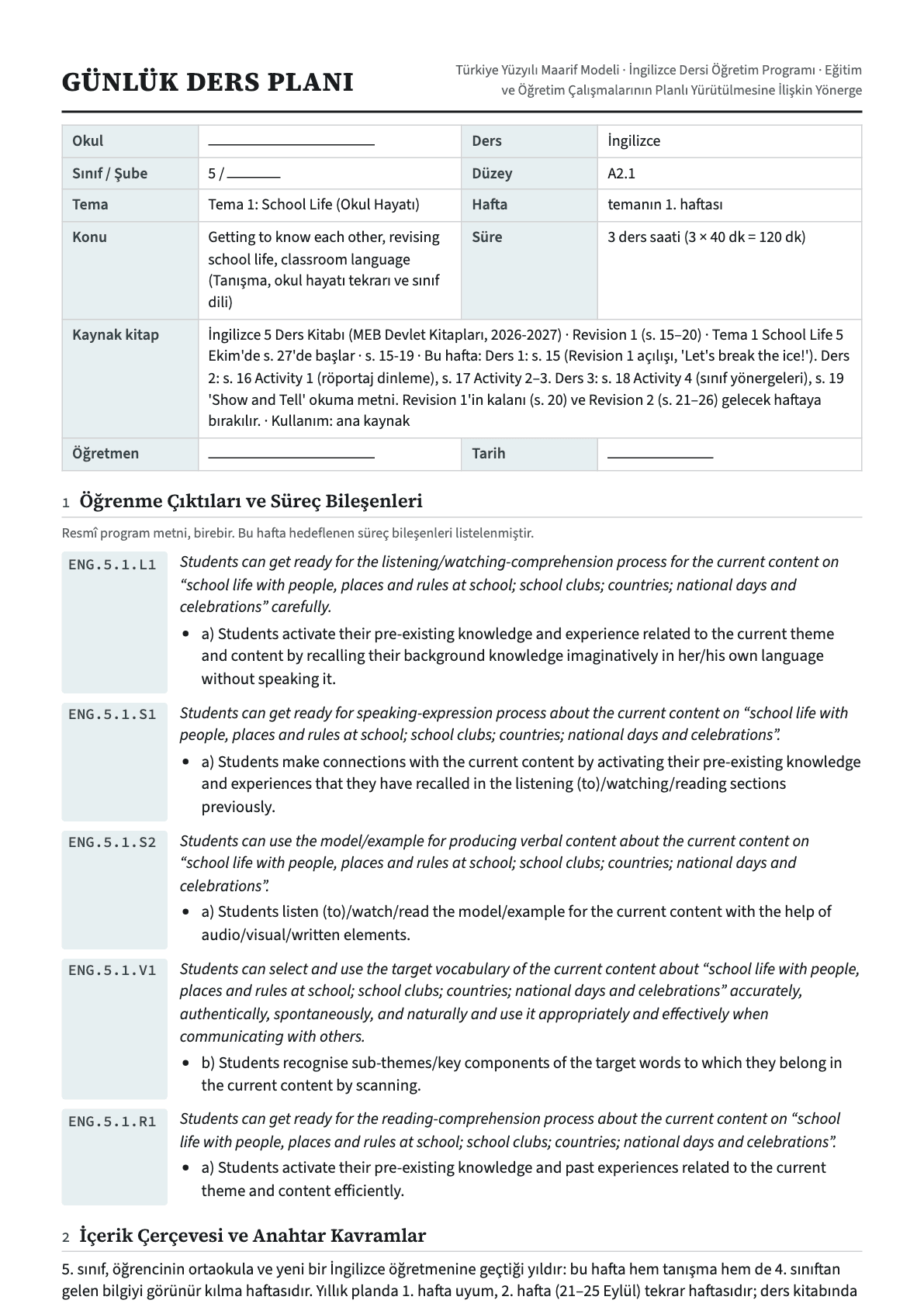
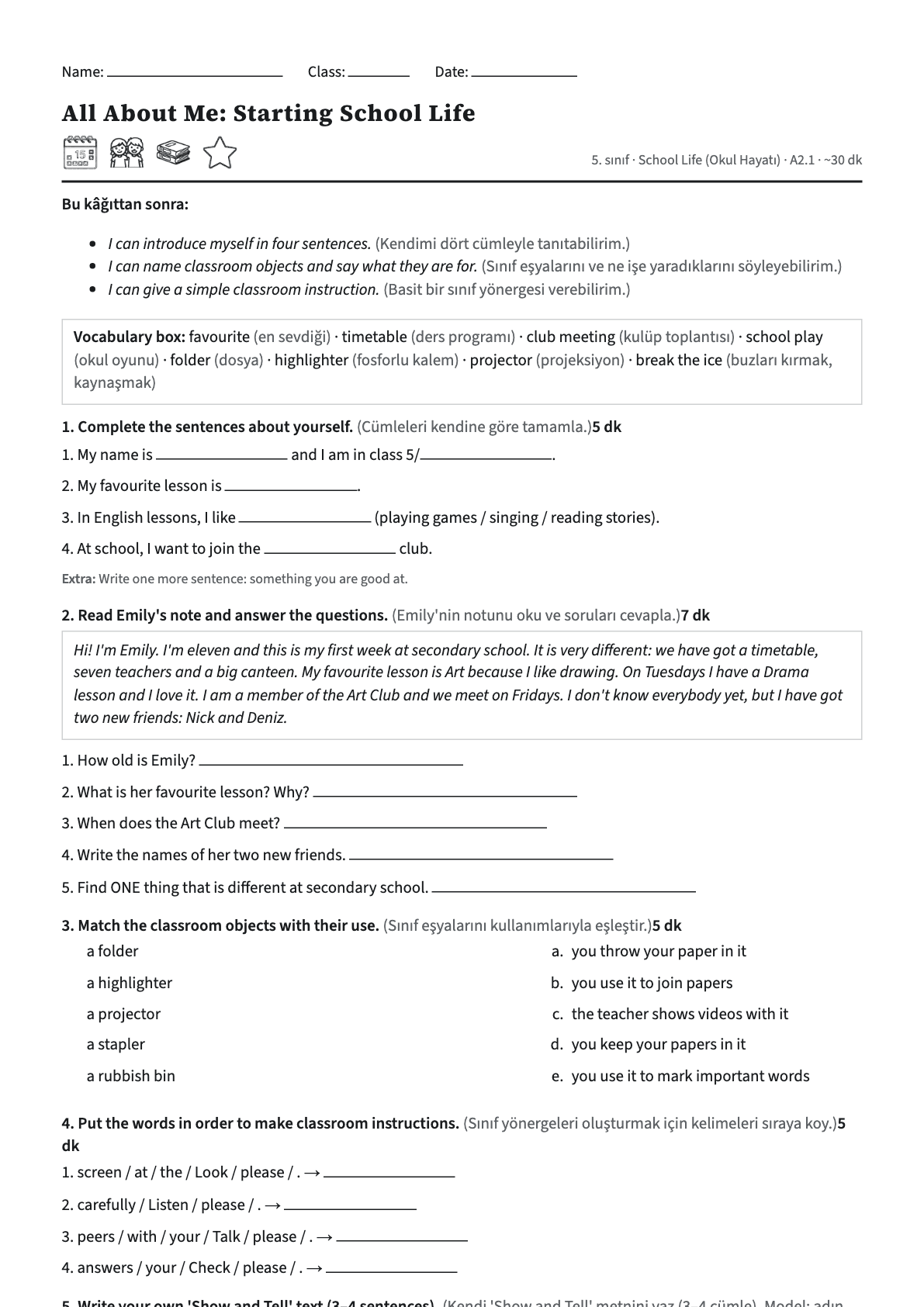
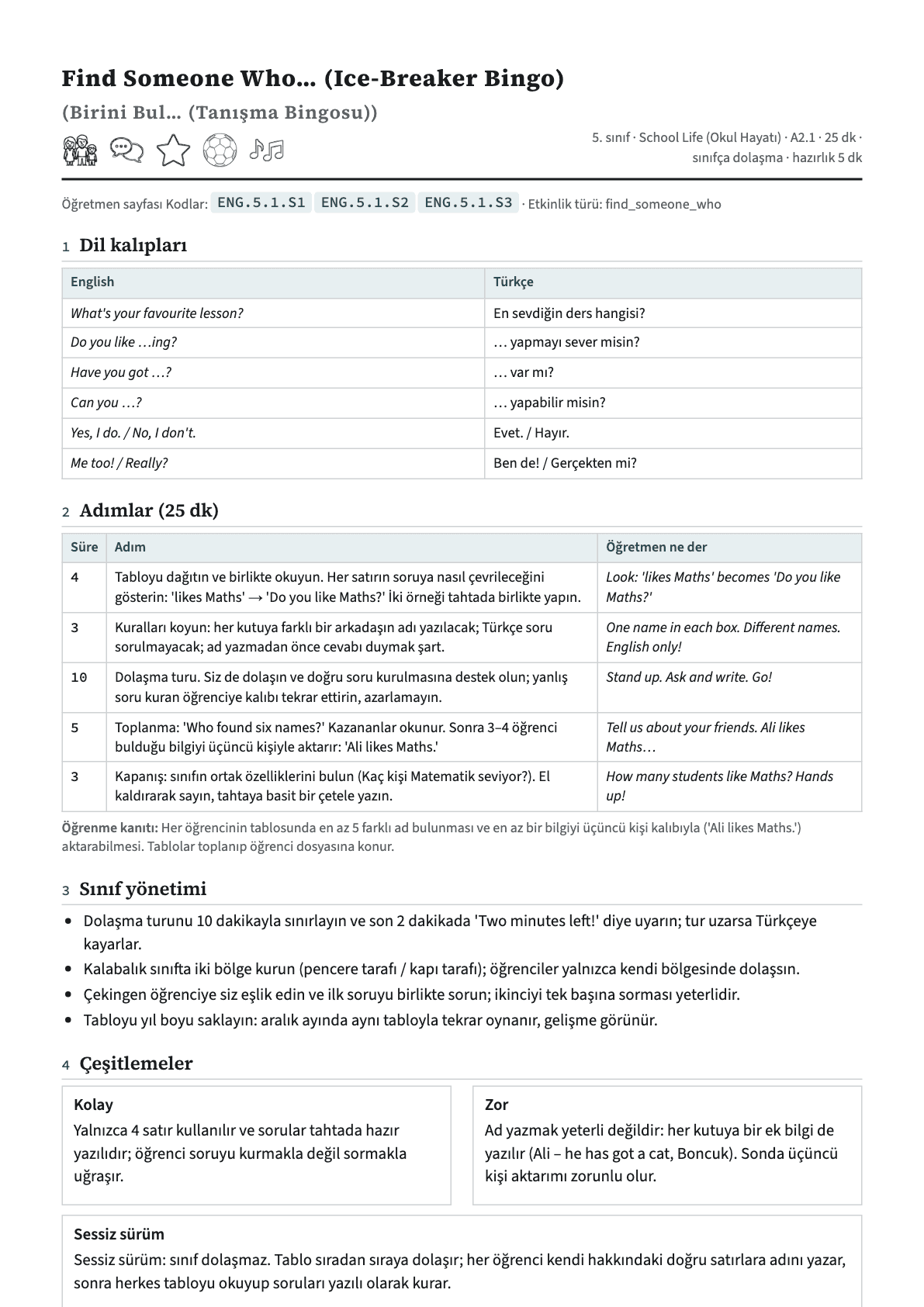
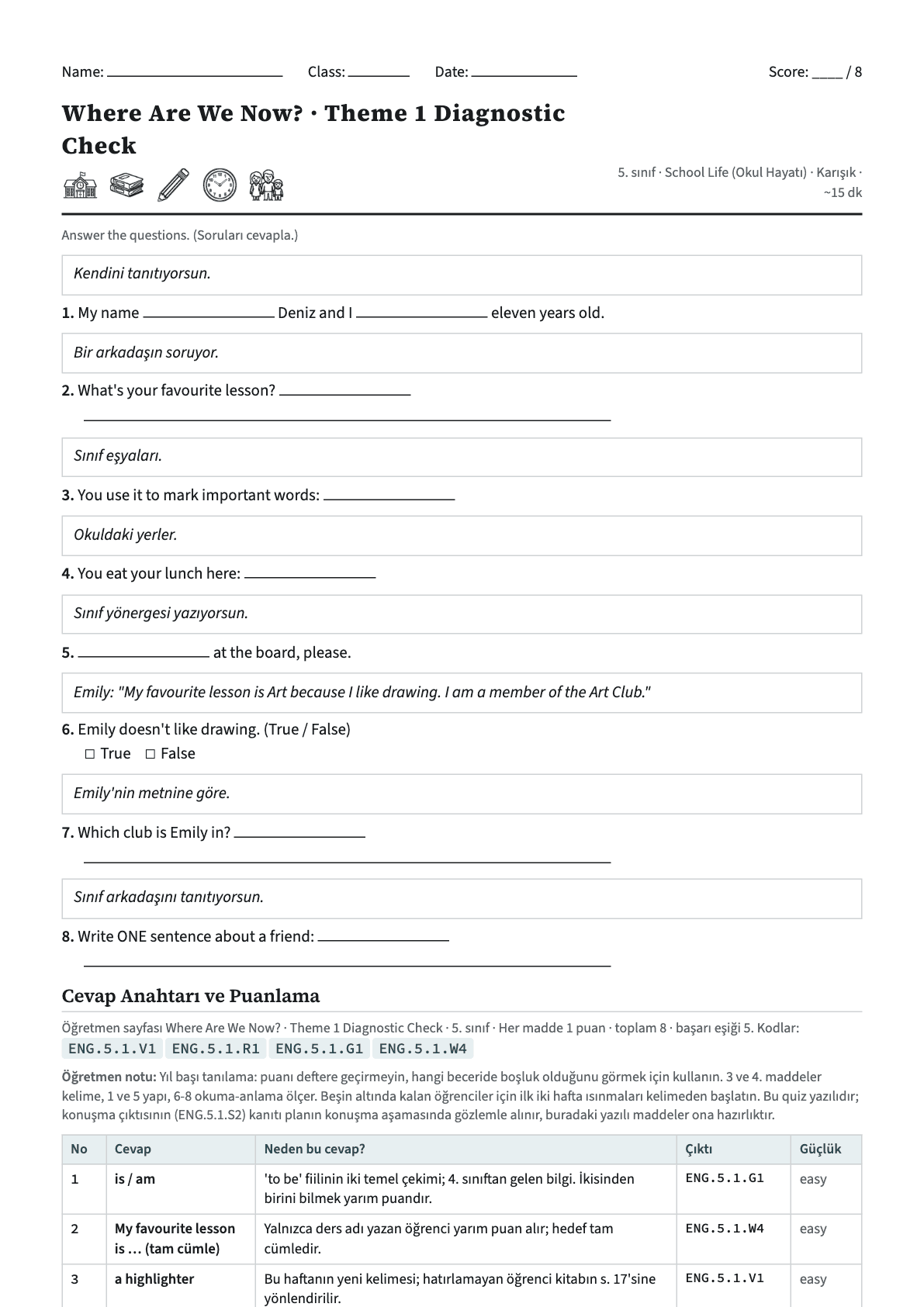
1. School Life temasının bu haftaki planı, kâğıdı, oyunu ve quiz'i hazır.
Ücretsiz dene